How to Teach a Puppy Not to Bite: Step-by-Step Bite Inhibition
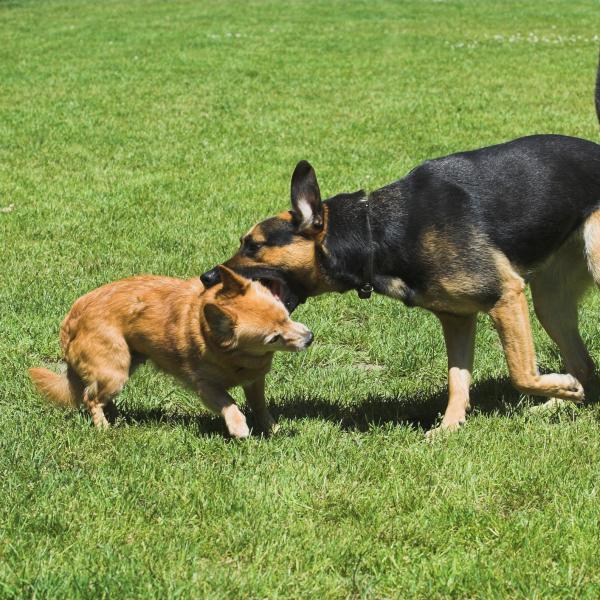
Puppies bite — it is normal. Learn to teach bite inhibition, what to do when they bite too hard, and which techniques do not work.
Puppies bite. It is normal, inevitable and part of their development. The problem is not that they bite, but teaching them to control the force of their bite — what ethologists call bite inhibition — and redirecting that behavior toward appropriate objects. A puppy that learns this early becomes an adult dog that, even if it bites in an extreme stress situation, does so with controlled pressure that minimizes damage.
Why Puppies Bite
- Exploration: the mouth is their main tool for understanding the world. Everything they encounter goes through their teeth.
- Play: among puppies, play includes biting. It is their natural way of interacting.
- Teething: between 3 and 6 months, baby teeth fall out and adult teeth come in. Gums itch and biting relieves the discomfort.
- Overstimulation: a tired or overly excited puppy loses control of biting force.
How Puppies Learn to Control Force
In the litter, siblings and the mother handle this teaching naturally: when a puppy bites too hard, the other yelps and stops playing. This play interruption teaches "that force hurts, I lose my playmate." Puppies separated from the litter before 8 weeks often have poorer bite inhibition precisely because they missed this learning.
What to Do When the Puppy Bites Too Hard
- Immediate reaction: when the puppy bites too hard, make a sharp sound (a short, clear "ouch") and immediately go limp — do not pull away fast, as that excites them more.
- Play pause: after the sound, ignore the puppy for 10-20 seconds. Turn your body, avoid eye contact, do not interact. Play stops as a consequence of the hard bite.
- Resume: after the pause, resume play normally. If they bite hard again, repeat. Three times in a row means the play session ends completely.
- Consistency: everyone in the household must react the same way. If one person allows it and another does not, the puppy cannot learn the rule.
Redirecting to Toys
- Always have a toy at hand during interactions. When the puppy tries to bite your hand, offer the toy before they do.
- Use toys of varied textures: some puppies prefer hard rubber, others fabric, others noisy ones.
- Freezer toys (filled with frozen pâté or broth) are especially useful during teething.
- Rotate toys to maintain interest.
What Does Not Work
- Shouting or physical punishment: increases excitement or creates fear — neither helps learning.
- Playing with hands directly: if the puppy learns hands are toys, changing that pattern later is very difficult.
- Water spray or other punishments: the puppy learns not to bite when you are watching, not to control their bite.
- Pinning them down or rolling them over: these "dominance" techniques create stress and damage the bond without teaching anything useful.
When to Consult a Professional
If the puppy bites with abnormal intensity or frequency for their age, if biting is accompanied by intense growling or stiff posture, or if there is no improvement by 5-6 months, consult a trainer specializing in positive methodology.